// web development · devhouse
DevHouse Internet Software Development House
The GitHub Pages landing site for DevHouse, a Brazilian open-source web studio founded in 2012. A single-page identity hub linking the company website and its first open-source project, Robot.
 HTML5
HTML5 CSS32012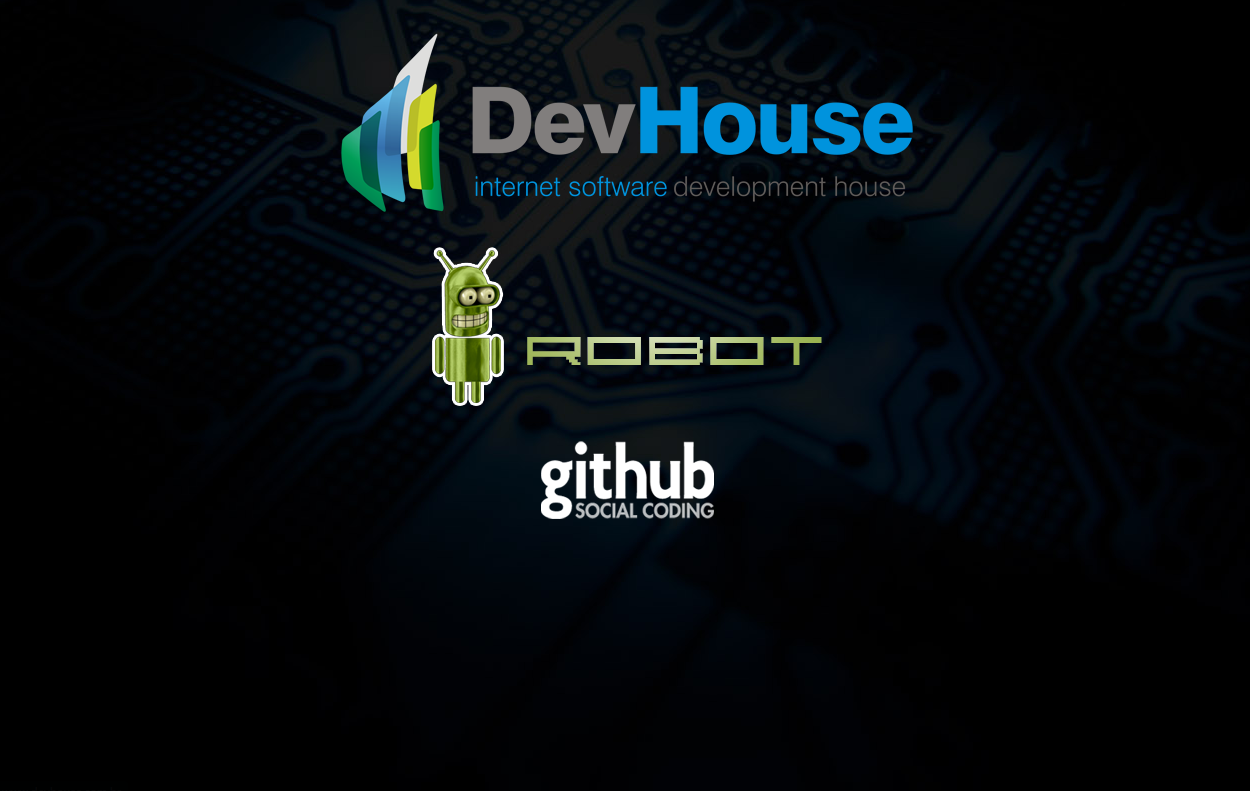
Screenshots
Overview
DevHouse Internet Software Development House was Leonardo Vasconcellos's own web development company, built during the early growth of Brazil's tech industry. This repository is the GitHub Pages organizational landing page — the first public face DevHouse showed to the developer community.
The page is deliberately minimal: a full-bleed atmospheric background, the DevHouse logotype centered on screen, and two anchor links — one to the company website and one to Robot, DevHouse's first open-source project. No framework, no build step, no CMS. A clean HTML document delivered directly from GitHub Pages.
What made this meaningful was the signal it sent: DevHouse wasn't just a client services shop — it was a company that built in the open, contributed to the developer ecosystem, and put its GitHub organization front and center. The landing page became the handshake between the company's commercial identity and its open-source ambitions.
Highlights
Developer-first organizational identity
Established DevHouse's GitHub organization presence and open-source identity from day one, giving the company a developer-first face before open-source became standard practice for Brazilian studios — directly supporting business development by building credibility with technical clients and collaborators.
Zero-cost, always-on hosting
Zero-dependency static delivery via GitHub Pages eliminated hosting costs entirely and kept the company's developer-facing presence always-on with no operational overhead — a deliberate infrastructure decision that freed budget for product work.
Open-source project gateway
Served as the gateway to Robot, DevHouse's first open-source release, channeling developer traffic from the GitHub org directly to the project and seeding early community adoption around the company's work.